Hull Thickness Measurement and Inspection
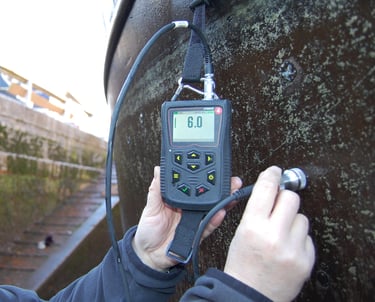
Hull thickness measurement and inspection are essential for understanding the structural condition of a vessel and planning repairs before corrosion becomes critical.
Harbort Klaipeda combines ultrasonic thickness readings with technical visual assessment to identify steel wastage, local corrosion, coating breakdown and areas that may require closer class attention.
The work is performed in line with marine survey practice and can support inspections under DNV, BV, Lloyd’s Register, RINA, NK, KR and PRS.
Hull Thickness Inspection scope
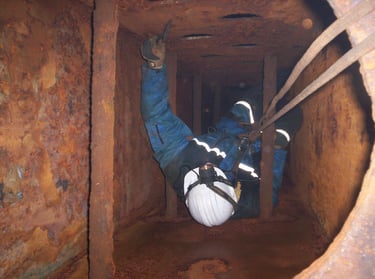
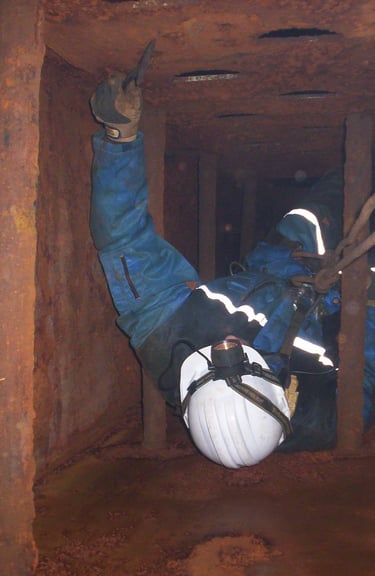
Typical inspection areas include side shell plating, bottom areas, weather decks, transverse and longitudinal bulkheads, web frames, stringers, tank tops and local structures with visible corrosion or previous repairs.
The service can be arranged during dry-docking, alongside periods or selected afloat conditions where access and safety permit.
Measurement planning is based on class requirements, previous reports, vessel age and known corrosion-prone locations.
Hull Thickness Method and Assessment
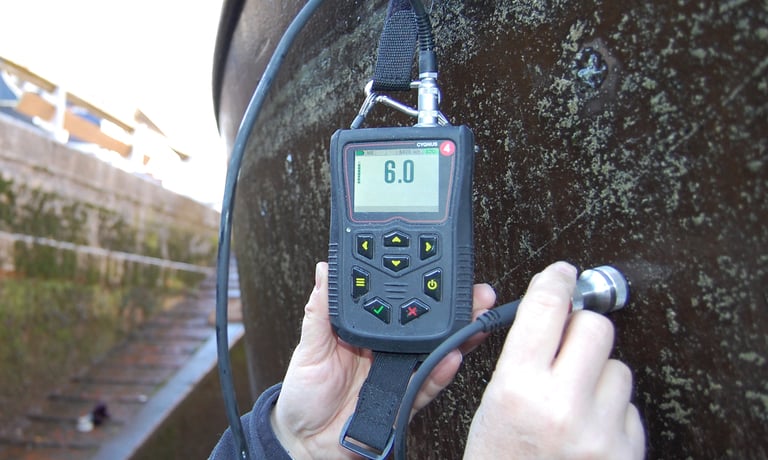
Ultrasonic gauges are used to determine remaining steel thickness without damaging the structure, while visual inspection helps evaluate the pattern and severity of corrosion.
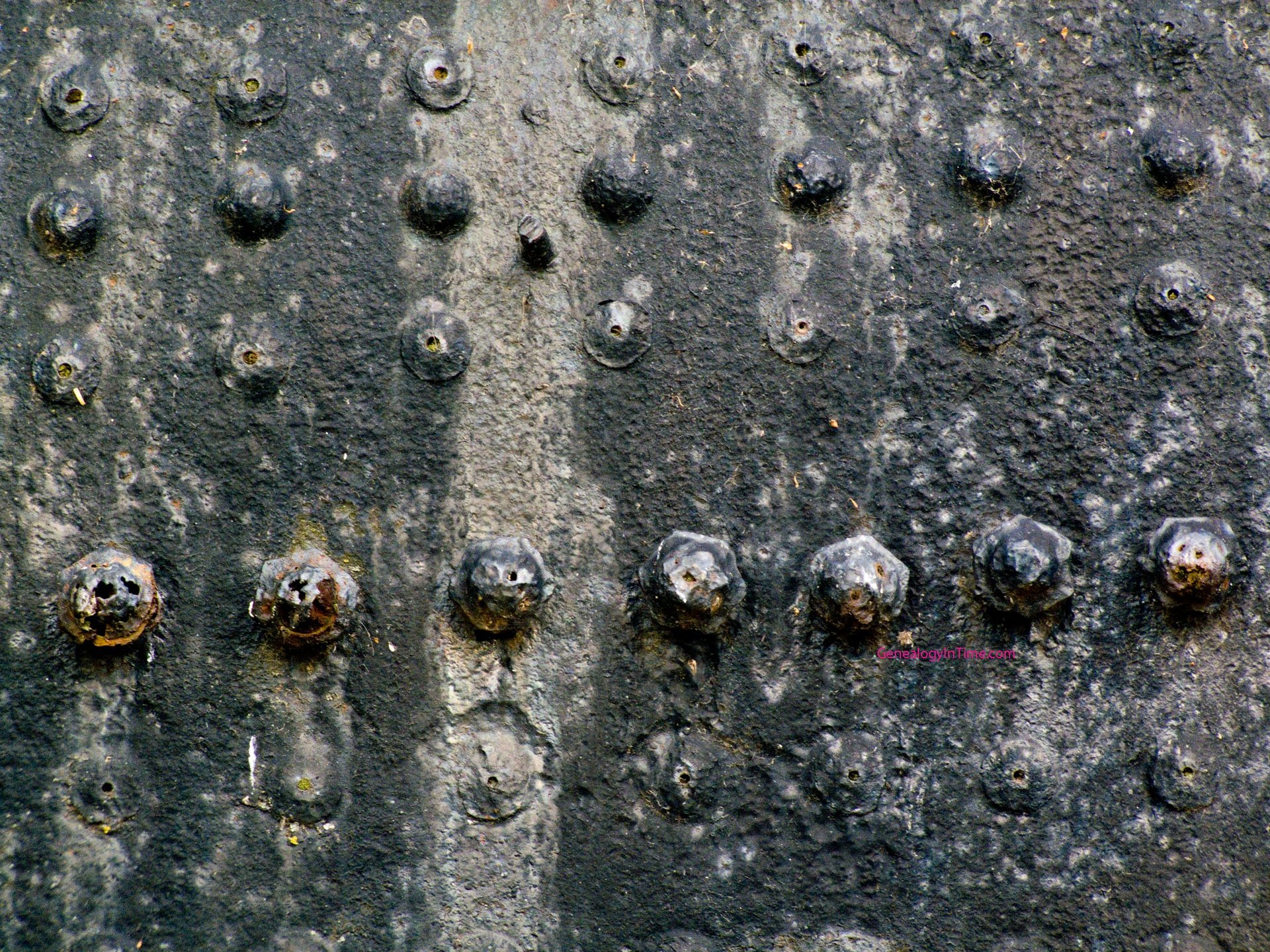
Special attention is given to suspect areas, structural transitions, welded connections and locations affected by coating failure or water accumulation.
This combined approach gives owners a more practical picture of hull condition than thickness data alone.
Operational Value
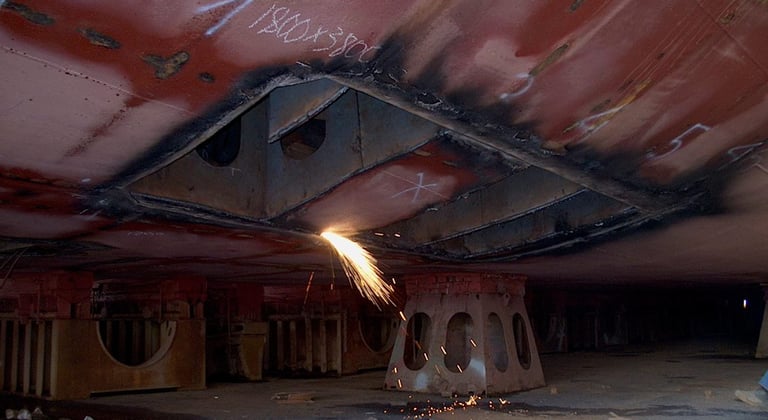
Reliable hull thickness data supports budgeting for repairs, avoids unexpected steel renewals and improves preparation for shipyard periods.
It also strengthens communication with class surveyors, buyers, charterers and repair contractors by providing documented evidence of actual condition.
Clear reporting allows technical managers to prioritize repairs based on structural importance and measured diminution.
Our Hull Thickness Measurement & Inspection Service area
Hull thickness measurement and inspection attendance can be arranged in Baltic Sea and North Sea ports such as Klaipėda, Riga, Ventspils, Tallinn, Gdańsk, Gdynia, Hamburg, Bremerhaven, Rotterdam and Antwerp, depending on vessel schedule and access.
Mobilization is planned to match tight port windows and survey deadline